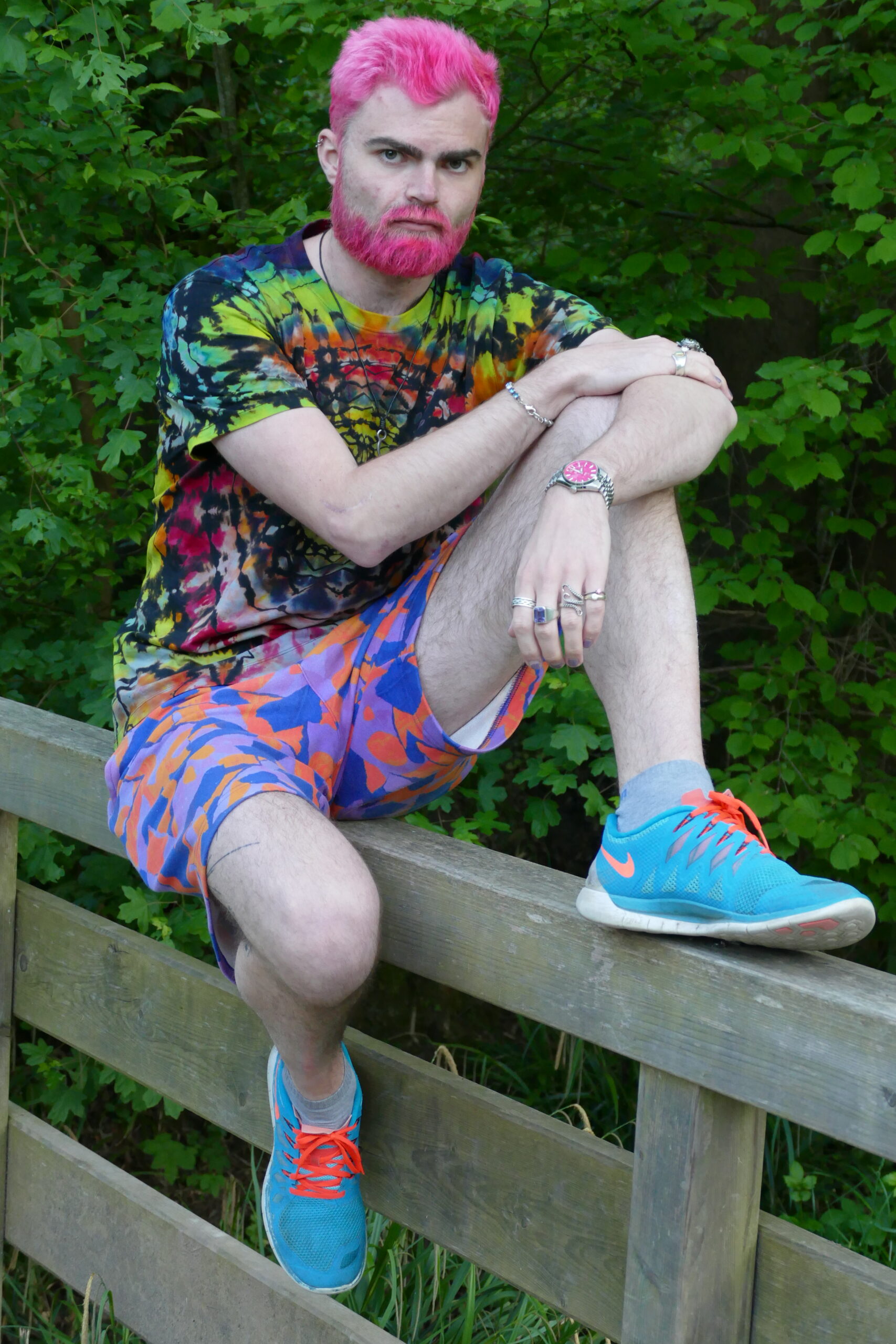
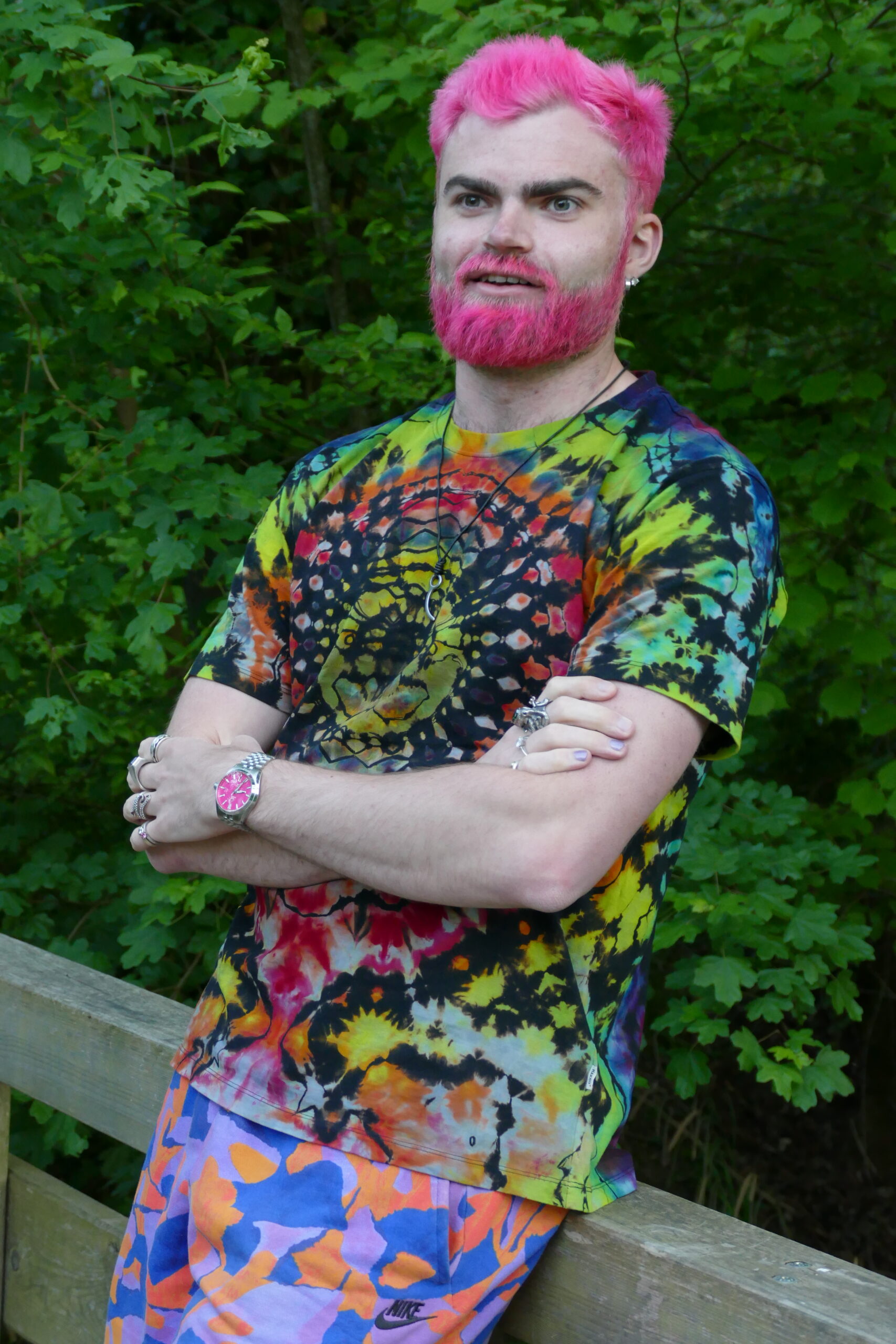
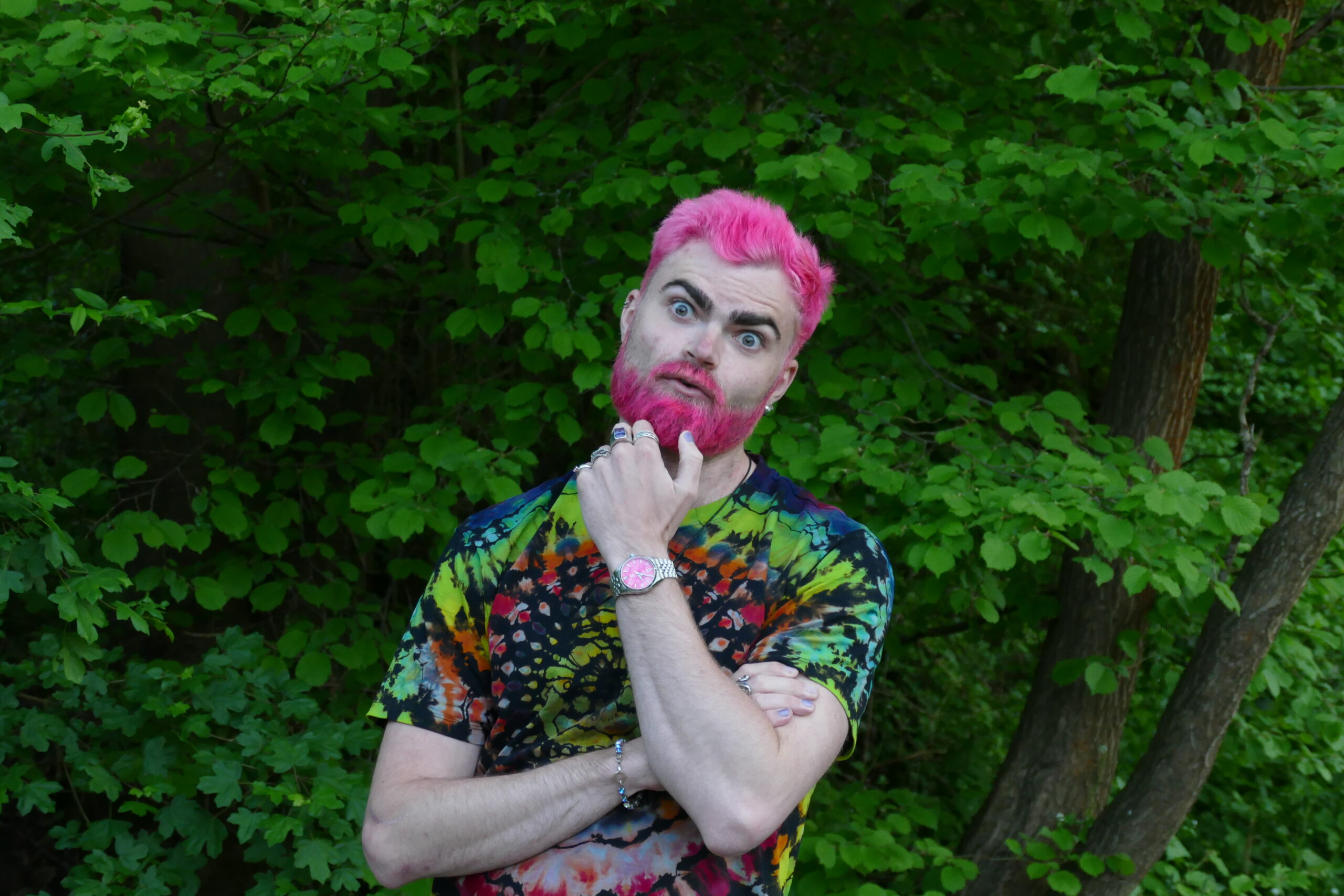
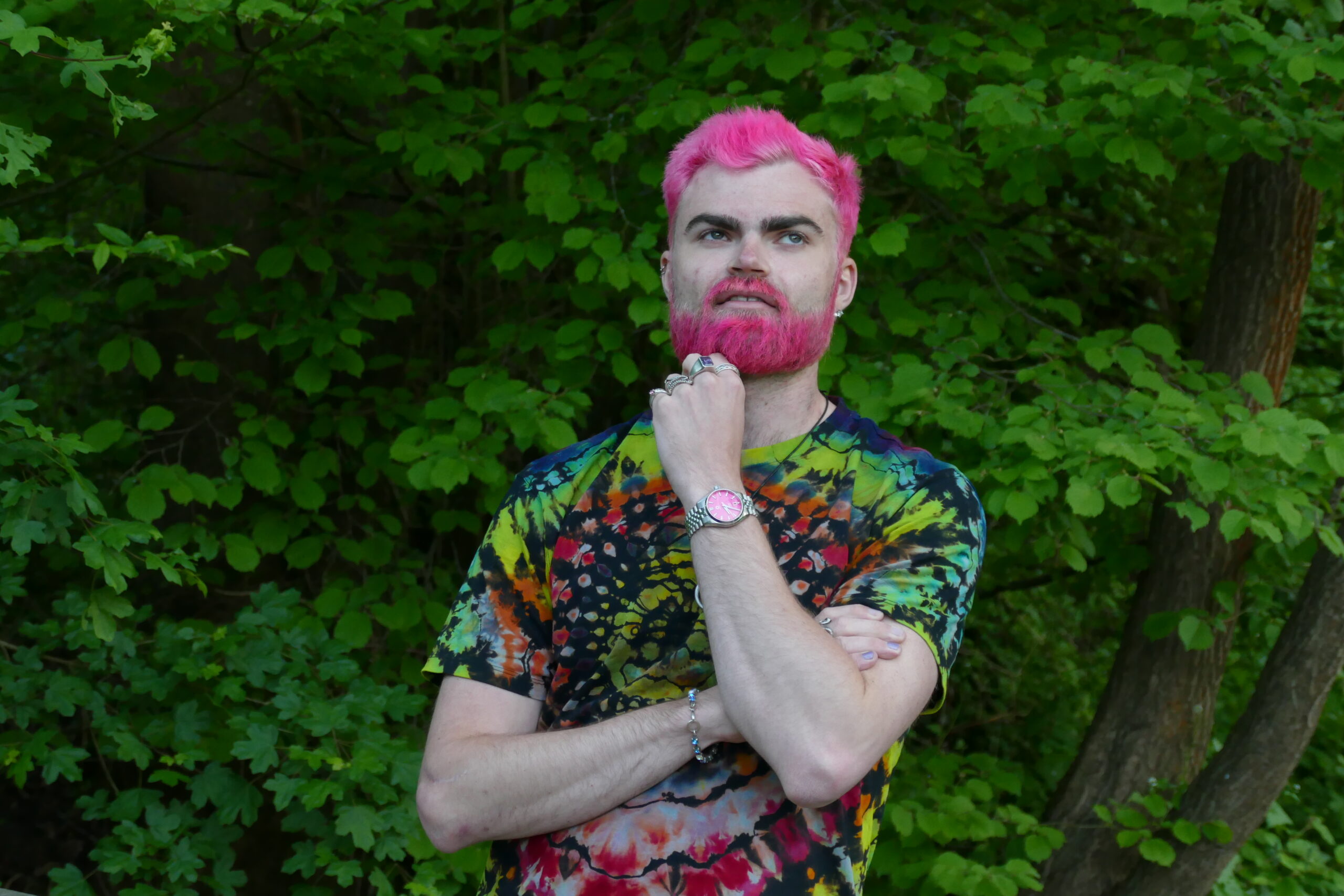
Hi Felix, nice to meet you,
I’m glad you took the time to do this interview with us.
You’re welcome.
How are you?
A little tired, but otherwise fine.
You’re really stressed out, aren’t you?
I’ve got a lot on my plate right now. But it’s also just because I have my regular job,
my 40-hour workweek, and I’ve always done a lot on the side.
But right now, there’s just a little more.
But I’m sure it’ll settle down a bit over time.
Ja, ja. Mensch, topaktuell natürlich. Du warst ja bei der Heidi,bei
Germany’s Next Topmodel
It’s been a while since then. But yeah, exactly.
How did you end up there? Tell me, how did you get there? Did someone sign you up?
Did you do it yourself? How did that happen?
My colleagues said they wanted to sign me up. I thought the idea was funny, and then I thought about it.
Then I decided to give it a try, just to see how far I could get. But I didn’t really intend to participate. It was more like,
just seeing how far I could get—as an experiment.
Then I went to a pre-casting in Munich after I was invited, having sent in a video. There was this really wholesome vibe.
Everyone was so nice that, for the first time, I could actually imagine doing it. That’s how I got in,
just sort of slipped in. Then I participated.
That must have been a really exciting time, I imagine, right?
It was definitely an exciting experience. Something different. I treated it as a kind of adventure vacation.
I took unpaid leave during that time. I went there without any high expectations, knowing that I could leave at any time
without hesitation. Just to have some cool experiences.
There were definitely some exciting experiences along the way. It was worth it, I’d say.
And during the photo shoot? Did it just come naturally to you? Is that something you’re good at?
Or was it a bit of a struggle for you?
A mix of everything, I’d say. Beforehand, I actually watched a few videos as part of my prep, where people showed
how to do things.
They gave a few tips and shared some tricks. For example, what to look out for with angles and how lighting affects
the whole thing. I come from an artistic background and the creative industry.
That’s why I have a basic understanding of how things might look. But I’m by no means an expert in this field.
Other than that, it was just a matter of following the instructions you’re given. That usually helps.
If the photographers are good, they can get quite a lot out of someone like me who has no idea and no prior experience,
I’d say.
You’ve been an artist for a long time, haven’t you?
Yeah, I’ve always been creative. Yeah, yeah, yeah, definitely.
And I’ve seen that you do some really great drawings.
Oh, thanks.
You paint large, really beautiful pictures. I’ve looked into it a bit and I think what you’re doing is really great.
Yeah, thanks, I’m really glad to hear that. Yeah, exactly—just some colorful lines and dinosaurs and stuff like that.
Yeah, it’s just, well, a really nice way to express myself, something I can actually do.
And the whole thing, yeah, I don’t know. I think everyone has their own outlet for letting their inner feelings out.
And for me, it’s just that—colors and canvases and art and drawing and everything that goes with it.
Yeah, exactly.
Have the canvases and colors always been like this, or were there other options in the past or in between?
In terms of art technique? Well, I have to say, I used to draw almost exclusively in black and white and didn’t really
know what to do with colors—at least as a medium—simply because it was overwhelming, since color theory
can be extremely complex.
I mean, there’s just so much to it—for one thing, how colors harmonize
with each other, and how colors interact, for example, even in something like portrait drawings or facial features,
when the skin has different nuances and then, through subsurface scattering, undertones and such
come into play and take shape.
The whole thing is super complex. That’s why, as a child and teenager, I used to draw a lot in black and white
and do that. But since entering the film industry, where I work as a matte painting and content artist,
you inevitably have to work with colors, because you’re creating colored backgrounds for all sorts of things.
And that’s where I learned a lot more,
like how light behaves and how it refracts and how it causes color bounce and so on.
There are a lot of theories behind it that can help you deal with it better.
And the approach is completely different, too. When you draw, you just
draw the lines and trace the outlines.
But when you paint, you work much more with surfaces, light, and shadow. It’s a completely different approach.
I didn’t understand that back then, which is why I never really liked it as a teenager or a kid. Exactly.
And do you also incorporate other materials into your work and make collages or something like that?
Right now. So the thing is, art is a very fluid thing. You’re not stuck on just
one single thing.
Right now, I’m just really into working with canvas and acrylics. But I actually have a few ideas
I might want to try out, like painting on acrylic glass or something,
to create different layers and stuff like that. So there are lots of possibilities that are still opening up.
But I don’t currently use any collage-like materials. I’m not incorporating anything else right now.
Maybe gold leaf or something like that, but that’s still in the planning stages. But exactly, generally speaking,
it’s simple.
You have a really interesting job, too.
Yeah, it’s a matter of interpretation. Not as cool as “astronaut.” Yeah, exactly. But yeah, I work as a matte painter and
concept artist in the VFX industry. That means I create backgrounds and effects for movies and TV shows.
To put it simply. Exactly. Simple. Broken down. Yeah.
And for video games, too?
Not at all for games. No, actually, where I’m based, we’re very specialized in TV series.
We make very few movies. Most of what we do are TV series for Netflix, HBO, and the like.
And how exactly does that work? Could you explain it a little, please?
It’s a computer-based job. So I sit at the computer and just get to work. And exactly, we basically get
images sent to us by the client—so-called plates—on which we have to create things. The client will say,
“Oh, for example, we want to have a castle in the background here or something like that.”
And then you can build the castle in 3D; that would be the 3D department. You can also paint it in 2D.
That would be the art department, matte painting, which is what I’d be doing now. And then there’s compositing,
where they insert the whole thing and make sure the texture fits, that it generally blends into the image,
so you can’t tell in the end that it was created separately. Yeah, exactly. And there are lots of
different departments. And I’m just in the one that creates the two-dimensional images
and works a lot on the layer level. Exactly. Super interesting and a lot of fun, I think.
Yeah, definitely, definitely. So it’s a pretty cool job. Sometimes it can be stressful, but overall
it’s a lot of fun.
Cool coworkers, it’s a creative industry. There are lots of ways to develop yourself there, I’d say.
Great. Do you actually have time for a personal life?
Yeah, I definitely have time for a personal life. It’s always a matter of, well, I actually already do—I mean,
I have a lot of hobbies that I pursue. I mean, art is actually part of my personal life in a way. It’s part of it,
after all. I do a bit of sports, hang out with friends a lot, play some instruments. So I’m always pretty busy with all kinds
of things.
So what kind of sport is it?
I go bouldering regularly to stay in shape, and other than that, I go skydiving every now and then—exactly.
Hey. That’s awesome.
Yeah, you’ve got to do something, right?
What was your first jump like when you jumped out of the plane for the first time?
My first tandem jump—where you’re basically strapped to someone else—was actually really nice.
I was always afraid of heights as a kid, so I gradually tried to get over it by climbing,
bouldering, and doing all sorts of things. And then in New Zealand, when I was still in high school back then,
I had this goal of doing a tandem jump at least once, because it’s just kind of that typical adrenaline-fueled country.
And somehow the fear was huge at first, but then you worked toward it and earned the money for it
on plantations and at whatever farms you worked on.
And eventually it became a goal I wanted to achieve, and then the jump itself was just amazing.
It was just really—that feeling of falling, you know, the freefall, the whole experience, seeing the world from above—
it was definitely beautiful. It definitely made me think I have to do it again someday.
And then I realized that you can actually do it on your own pretty quickly. After a one-day course and
a few practice runs, in theory, if you take a proper course, you jump out of the plane on the very second day
and are then caught. Crazy! Yeah, exactly. But that’s a different story—it involves a lot of fear.
It’s exciting because I think you learn a lot about confronting your own fears and overcoming them.
Because that very first jump, when you’re on your way up, I think the fear is incomparable to
any other fear of death you’ve ever experienced. So when you actually have time to think about
what you’re doing, you have to pay extremely close attention, because you’ll be hanging there alone on the canopy,
and then you have to make sure that you…
Beforehand, you learn everything that can go wrong, like how the canopy can twist, what kinds of situations there are,
like a double Miff. So a ton of things that could end fatally,
if you’re really unlucky. Which is extremely unlikely, but it’s still something you keep in the back of your mind.
And that feeling of stepping out of the plane, standing on the jump board, and seeing the world pass by four kilometers
below you—that’s something else. I had a blackout on my first jump.
I don’t remember the first few seconds, until you’re sort of back to yourself again and then in freefall.
But once you keep going, that fear turns into a kind of euphoria, and then it’s really worth it.
How long does it take from the moment you jump until you land?
Not very long. A standard parachute deployment takes about 10 minutes at a fast pace or 20 minutes at a slow one,
I’d say. 25 minutes to reach an altitude of four kilometers. The jump itself is about 50 to 60 seconds of freefall.
And then, depending on how aggressively you fly your parachute and what kind of parachute it is, you have about one
to five minutes of parachute flight, and
then you’re back on the ground. So one jump is really quick. I’d say three to five minutes is pretty standard.
So the fun is relatively short. But in terms of perceived time, it feels much longer overall.
And definitely super intense. Yeah, definitely. I mean, when you’re waiting in line for a roller coaster at an amusement park,
you’re waiting for a relatively long time. You wait for a relatively long time and then only get a two-minute
Do you travel a lot?
Yeah, I think there are people who travel a lot more. But I definitely enjoy seeing new places.
Where have you been all over the world? Last year I was in Tokyo. The year before that, I was in Panama and New York—
so, the U.S. Then New Zealand a few years ago. I’ve been to Hungary and Spain quite a bit. I guess the usual European
destinations—like France, I don’t know. Last year I was in Rome for a concert. But I don’t think it’s that much compared
to how much other people actually travel sometimes.
What was the most emotional experience you’ve ever had—the kind where you say, “Wow, I’ll never forget that”?
There are a lot of them, I think. I think I need to think about it for a second. There are some that come to mind, but
I’d rather not mention them.
I don’t know. I’m just trying to think of something good to mention. Good question. I mean, the first ones
that come to mind are near-death experiences or stuff involving substances.
I haven’t had that, which is something you’d really want to experience.
But, wow, I don’t know. I can’t really name anything specific when I think about it, aside
from those more extreme things.
I think, realistically speaking, the 10th or 11th skydive. At a certain point,
that kind of intense feeling hits you.
And there it is—those emotions you feel there—they’re comparable to very, very little that’s normal.
When you leave the plane, no longer with that fear, but with this pure euphoria and this freedom,
jumping into that void.
The knowledge that it’s a privilege to enjoy this freedom. It’s the absolute maximum of what’s possible in terms of the feeling
of being free, of flying—then, I don’t know, clouds all around you, the world below you so small, the plane getting smaller.
I think that’s one of the most intense feelings, when you go through that shift, jumping from fear to euphoria.
That’s how it is.
Wow. What are your next goals—long-term, medium-term, and short-term?
I don’t really make any big plans for the future, I have to say. I live very much in the moment. And sure, I mean, I don’t think
it’s as if I don’t care about tomorrow at all. But I go with the flow and see where it takes me. I think
my goal has been and always will be to just be happy and have fun. If I can stick with that and keep it at that
level, then I’m happy.
Do you like to cook?
I have to admit, I’m really bad at cooking. It’s something I don’t spend much time on. I have to manage my time carefully.
And cooking ends up taking up very little of it. I enjoy going out to eat with colleagues at restaurants. I really love good food.
I love sushi. But cooking is definitely one of my weak points. I haven’t put much time into it so far,
because I just don’t feel the need to do it for myself. I’m not that picky.
I like to eat good food, but I’m also satisfied with very little.
And for me, putting a lot of energy into it is, in most cases, kind of a waste of time.
If I were to cook for myself every day, it just doesn’t seem to add up for me
so far.
It will probably change at some point, but right now it’s something I do very rarely.
What’s your favorite dish?
Favorite dish?! These days, I’d actually say sushi. Something like a good aburi sake nigiri or something like that.
Thick slices of salmon, slightly seared, with that rice underneath. Or otherwise, just the things I had growing up.
All the home-cooked stuff—like my mom’s pasta bake or my grandma’s potato salad
or something like that. That’s good, too. I can still really enjoy that kind of thing. Definitely, sure. That won’t be bad.
I heard you’re going to a trade show soon, right?
Going to a trade show? Hold on, let me think. What kind of trade show? An art fair?
Art? To the Art Fair?
Like that? Really? Should I go there? I’m not sure.
Really? That’s news to me. I haven’t heard that before.
That’s what I thought, because she’s coming to Stuttgart this weekend. Yeah.
From Friday to Sunday, I guess. Yeah. And I thought you might be there too?
Nah, actually not. I’ll probably be in Düsseldorf next weekend. I’m going to an opening on Friday night
for an artist friend of mine. But other than that, I’m just out and about doing other things.
Nah, I’m actually not planning on going.
At least not yet. Maybe I’ll decide on a whim to stop by or something.
But definitely not as an exhibitor. Yeah, if it’s your own city. If you have the chance and it’s
fun for you.
Exactly, yeah. Definitely. Oh, I see. No, I… I think I need to have that space free again to take care of something like that.
I’m also still figuring out how to organize my own opening. But that’s also something where I’d rather
take the time for it and do it properly. Right now, there’s just a lot of other stuff going on. And I’m waiting until things have
calmed down a bit, and then I’ll tackle everything before I dive full throttle into these projects.
Before I overwork myself and end up with a burnout. Then I’ll still have the energy to enjoy myself.
Exactly, that’s important.
And do you have a rough idea of when the city is supposed to be found?
So, this fall, or even later this year? An opening? I think it might still happen this year. So, yeah.
We’ll see—late summer, fall. And I’d say that would be great. But I really don’t have any concrete plans
or visions right now.
And there’s some deadline looming that’s stressing me out or something. That wouldn’t do me any good right now. I
’m taking care of it and letting it run in the background, and I have contacts and am in talks.
But I don’t have a set date or anything like that yet.
Okay. What if someone wants to buy a picture of you, a piece of art?
If you’re interested in buying, you can message me right now. I don’t have a website yet where I’ve posted all of them.
You can see them on Instagram. But there, you can just contact me directly, and I’ll usually get back to you
and make sure everything works out. I’m also in the process of taking legal steps right now, especially getting things started,
so that everything is completely legitimate and all that. Yeah, yeah. So that the tax office doesn’t show up someday and say,
“Wait a minute.”
Yeah. It’s not that simple. You just think, “I want to sell pictures; that shouldn’t be too hard,”
but it’s a legal nightmare. I mean, I hate bureaucracy and organization—that’s not my strong suit at all.
But hey, all that should be sorted out soon, especially then.
Yeah, you do it once, and then it just keeps going.
Yeah, yeah. Yeah, exactly.
Felix, I really enjoyed it.
Me too. Thanks for the invitation.
You’re welcome, you’re welcome. And I wish you all the best.
Thank you very much.
We wish you continued success. And we hope to hear from you again.